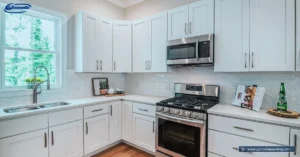
Some walls look flat in daylight and wavy at night. Joints show through the paint. Screw heads ghost. A tall window or a hallway light makes it worse.
That is usually a drywall finish problem, not a paint problem. A Level 5 drywall finish fixes it. A thin skim coat of joint compound goes over the entire wall, so the surface has one even texture before paint.
At Gonnella Painting & Restoration, we finish drywall and paint interiors across Boston and Brookline. We see this issue in gut renovations, new additions, and repaired walls in older homes. Most owners never learn the finish level was a choice.
Paint cannot hide a rough surface. Sheen makes every flaw louder. This guide explains how Level 5 works, how it differs from Level 4, and which rooms need it. Lighting, paint sheen, and wall condition decide the answer. It also covers what Level 5 adds to interior painting in Boston, MA, so you can decide before work starts.
What Is a Level 5 Drywall Finish?
A Level 5 drywall finish is a thin skim coat of joint compound over the entire wall, applied on top of a full Level 4 finish. It is the highest of six finish levels, Level 0 to Level 5, set out in the Gypsum Association’s GA-214 standard.
Level 4 covers tape, joints, and screw heads with compound. The paper face of the board stays bare between the joints. Paint soaks into bare paper and dried compound at different rates.
The skim coat closes that gap. It turns the whole wall into one uniform surface. After sanding and priming, paint dries the same everywhere.
Skip it under the wrong conditions and you get “flashing.” Parts of the wall look shinier than others, and the joints show.
How Is Level 5 Different From Level 4?
Level 4 finishes only the joints and fasteners. Level 5 finishes the whole wall. Level 4 is the usual pick for flat paint in normal lighting. It is not a lesser job. It is the right level for most walls.
A Level 5 wall follows four steps:
- Tape and finish the joints to Level 4.
- Skim coat the full surface with joint compound.
- Sand smooth, then inspect with a work light held at a low angle.
- Prime, then paint.
The low-angle light check matters most. It shows ridges you cannot see when you face the wall. Fixing them before primer is easier than fixing them after paint.
When Does a Boston Home Need Level 5?
A Boston home needs Level 5 when walls get glossy or dark paint, or when strong light hits them from the side. GA-214 recommends Level 5 for these conditions.
Gloss, Semi-Gloss, and Dark Colors
Sheen reflects light, so it shows every ridge and patch. Dark colors do the same. If you want semi-gloss or gloss walls, or a deep navy or charcoal, ask about Level 5 first.
Strong Side Lighting and Renovations
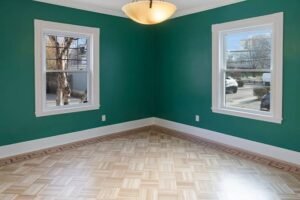
Light that skims across a wall exposes joints. Tall windows, long hallways, stairwells, and open layouts with large glass doors all create it. Rooms with tall windows, common in Back Bay and South End homes, are a good example.
Try this test at night. Hold a bright flashlight flat against the wall. If you see ridges or shadows at the joints, the finish level is too low for that lighting.
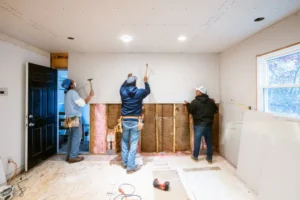
Renovations are the easiest time to decide. The walls are already open and bare. In a gut renovation or addition, set the finish level before the drywall crew leaves.
What Does Level 5 Add to an Interior Painting Project?
Level 5 adds labor, material, and drying time before the first coat of paint. The skim coat has to dry, get sanded, and get primed. Sanding makes fine dust, so good crews cover floors, seal doorways, and clean up before priming.
Expect more days than a Level 4 job. Price depends on wall area and room condition. For a general range, read our guide on how much professional interior painting costs in Boston.
Not every wall needs it. Closets, garages, and rooms with flat paint and soft light usually do not. Paying for Level 5 wastes money.
If an estimate only says “patch and paint,” the finish level is unclear. Ask for it in writing.
Still choosing a sheen? Read our guide to choosing the right paint finish for interior walls. For full-room work, our residential interior painting in Boston, MA service covers the prep and the paint together. We also offer Level 5 drywall finishing in Brookline.
Frequently Asked Questions
Is a Level 5 drywall finish worth it?
It is worth it for glossy or dark paint and for walls with strong side light. For flat paint in soft light, Level 4 is usually enough. Confirm your sheen and color first, because those drive the decision.
Can you add Level 5 over an existing painted wall?
Often, yes. The surface must be clean, sanded, and primed so the compound bonds. We inspect the wall first.
Does Level 5 apply to plaster walls?
No. GA-214 covers gypsum panels. Many older Boston homes have plaster walls. Plaster needs its own repair and smoothing process. The result can look just as smooth, but the method differs.
Do I need Level 5 for flat paint?
Usually not. Level 4 is the common recommendation for flat paint in normal lighting.
Get the Right Finish Level Before You Paint
A Level 5 drywall finish gives glossy, dark, or side-lit walls an even base. Level 4 is enough for many rooms. If you are unsure which your walls need, Gonnella Painting & Restoration can inspect them and give you a plain answer. Our crew works across Boston and Brookline. Request a quote to start.