Living in Boston means your home faces tough weather all year round. Cold winters. Wet springs. Humid summers. Many houses here are old and built with wood and plaster. That mix puts stress on walls and siding. Homeowners often repaint and still see flakes show up. That causes stress and wasted money.
This guide explains Paint Peeling in Boston. in plain words. You will learn what breaks paint grip, what local homes deal with, and what steps help paint last longer. This matters for comfort, safety, and home value across Greater Boston.
Key Takeaways
- Rain, snow, steam, and humidity sneak behind walls and siding, causing paint to lose grip and peel fast.
- Cold winters and hot summers make wood and plaster move, which leads to cracks, bubbles, and peeling paint.
- Many Boston homes have layers of old paint and worn materials that struggle to hold new coats properly.
- Without cleaning, sanding, drying, and priming, paint cannot bond and will fail early.
- Painters who know Boston homes, weather, and materials can prevent peeling and make paint last longer.
Common Reasons Paint Peels in Boston Houses
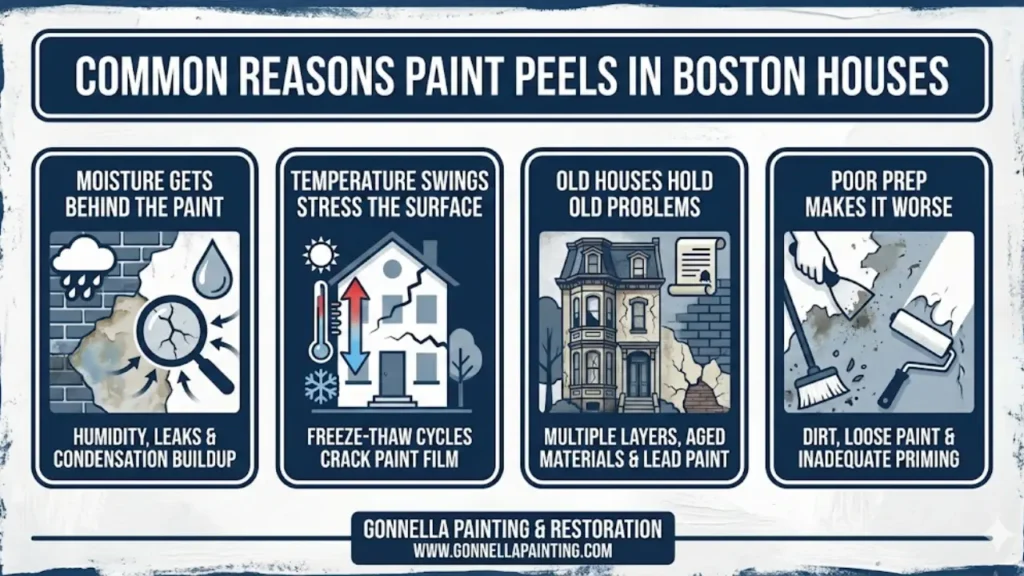
In Boston, peeling walls frustrate many homeowners. Old houses, wet weather, and shifting temperatures all work against paint adhesion. If you see flakes, bubbles, or cracks, local moisture and surface issues usually sit behind the problem, especially during Residential Painting projects.
Moisture Gets Behind the Paint
Moisture is one of the biggest reasons paint fails in homes around Boston. Wet weather, snow, and daily steam slowly push water into walls and siding. Once moisture gets trapped, paint loses grip. Over time, peeling and flaking become hard to stop.
- Rain and snow soak into wood and siding
- High humidity keeps walls damp longer
- Steam builds up in bathrooms and kitchens
- Moisture gets behind the paint film
- Loss of adhesion causes paint to lift and flake
Temperature Swings Stress the Surface
Homes in Boston face sharp weather changes each year. Cold winters and hot summers make building materials move. When surfaces shift too much, paint loses its hold and starts to fail over time.
- Expansion and contraction stress walls and siding
- Wood siding moves as temperatures change
- Plaster walls shift and form small cracks
- Paint cannot stretch with the surface forever
- Paint cracks, bubbles, and peeling paint begin to appear
Old Houses Hold Old Problems
Many homes in Boston were built decades ago. Time adds wear that paint cannot hide. Older materials, past repairs, and repeated repainting all affect how well new paint holds. This is a big reason homeowners keep asking why paint fails so often.
- Homes often have many layers of old paint built up over time
- Some past coats never bonded well to the surface
- Added weight stresses the lower paint layers
- Older wood and plaster weaken with age
Poor Prep Makes It Worse
Paint problems often start before the first coat goes on. In Boston, skipping prep lets moisture and dirt stay trapped. When the surface is not clean or smooth, paint cannot grab on and stay put for long.
- Skipping sanding leaves rough and loose areas
- Painting over dust blocks proper adhesion
- Leaving grime and grease weakens the surface
- Wet walls stop paint from bonding
- Without a clean, dry surface, peeling paint starts fast
How Professional Painters Prevent Peeling
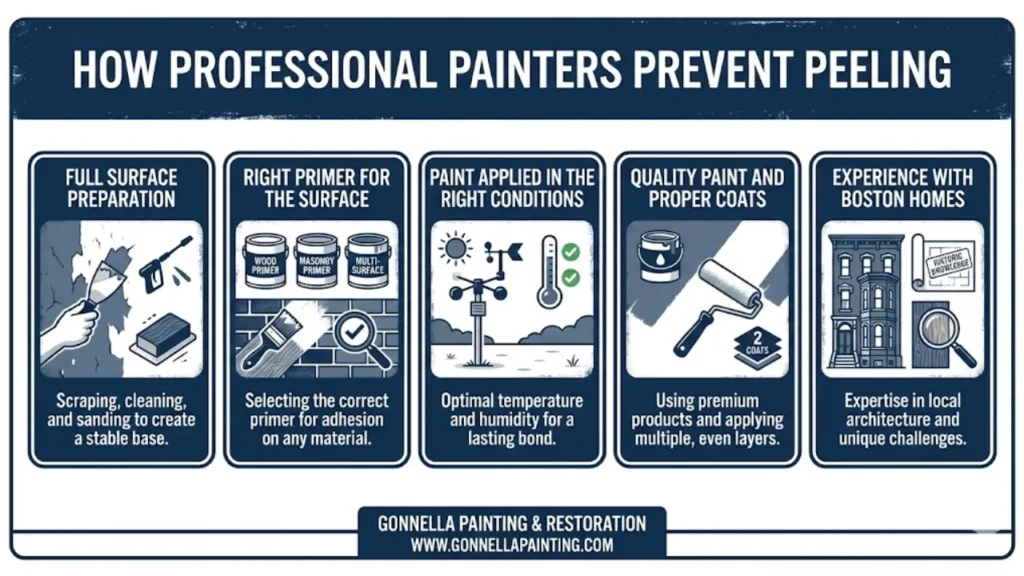
Professional painters prevent peeling by fixing the root causes, not just covering the surface. In Boston, the weather, moisture, and old walls demand care. Skilled crews focus on prep, proper paint, the right primer, and timing, especially on homes and Commercial Painting projects across Greater Boston.
Full Surface Preparation
Paint lasts longer when the surface gets proper care first. In older homes around Boston, walls and siding often hold dust, grime, and moisture. Skipping prep weakens paint grip. Careful cleaning and smoothing give paint a strong base to stick and stay solid.
- Wash walls and siding to remove dust, grease, and built-up grime
- Scrape off loose flakes and peeling paint
- Sand rough areas with sandpaper to smooth the surface
- Let everything dry fully so adhesion stays strong
Right Primer for the Surface
Primer helps paint stick and last, especially in older homes around Boston. Walls, wood, and damp areas all need different protection. Skipping primer or using the wrong type lets moisture and stains push paint away over time.
- Seal bare wood so paint does not soak in unevenly
- Block old stains from bleeding through the paint
- Protect damp areas where moisture builds up
- Use the right primer (paint) for drywall, plaster, and wood
- Apply oil-based primer where a strong grip and stain blocking matter most
Paint Applied in the Right Conditions
Paint needs the right weather to hold. In Boston, cold air, rain, and high humidity can ruin a fresh coat. Skilled crews wait for dry days and steady temperatures so the paint cures the right way and does not peel later.
- Check the temperature before starting any paint work
- Avoid days with high humidity or rain
- Paint only when the walls and siding stay dry
- Allow each coat to dry fully before adding another
- Skip rushing, since fast work often leads to peeling paint
Quality Paint and Proper Coats
Paint strength depends on what you use and how you apply it. In Boston, harsh weather tests every paint job. Thin paint breaks down fast. Strong paint and proper coats help walls and clapboard siding stay protected longer.
- Avoid thin or low-grade paint that flakes early
- Use high-quality paint made for local weather
- Apply multiple coats for even coverage and strength
- Let each layer dry fully before adding the next
- Protect the fresh coat from cracking and peeling
Experience With Boston Homes
Painting homes in Boston takes real local know-how. New England weather, older buildings, and mixed materials all affect how paint holds. Crews with local experience plan each step carefully and avoid paint removal mistakes that often cause early peeling and repeat paint failure.
- Know how cold winters and wet summers affect paint
- Handle old houses, plaster walls, and clapboard siding
- Plan jobs around local humidity and weather shifts
- Work on Residential Painting and Commercial Painting projects across Greater Boston
- Use local experience to reduce early paint peeling and failure
FAQs
Why does paint peel faster in bathrooms?
Bathrooms hold steam from showers and hot water. In homes across Boston, high humidity and poor airflow let moisture sit on walls. Over time, water breaks adhesion, causing peeling paint, bubbles, and stains near tubs and ceilings.
Does exterior paint peel more on wood siding?
Yes, exterior wood and clapboard siding move with temperature changes, rain, and sun. This expansion and contraction create paint cracks. Once the surface shifts, paint loses grip and starts to flake, especially on older Boston homes.
Can I just touch up peeling spots?
Touch-ups rarely last if the wall surface stays weak. Loose paint, dust, or hidden moisture under the wall causes new peeling. Without proper scraping, sanding, and primer, peeling often spreads beyond the repaired area.
Do landlords see more peeling paint issues?
Yes, rental properties often get quick paint jobs. Skipped prep, cheap materials, and fast drying times cause early paint failure. Many landlord homes in Greater Boston see repeat peeling because walls never get proper surface care.
Conclusion
Peeling paint is common in Boston homes for clear reasons. Moisture, cold winters, old materials, and rushed prep all play a role. Once paint loses grip, flakes spread fast. Knowing why is peeling in Boston? helps homeowners make better choices.
Careful prep, the right primer, and quality paint protect walls longer. With help from Gonnella Painting & Restoration, homeowners across Greater Boston can stop repeat peeling and keep their homes looking solid year after year.