Boston’s historic homes tell stories of New England heritage and architecture that deserve careful protection. Your Victorian-era property brings beauty and pride to Greater Boston neighborhoods. However, maintaining these treasures comes with unique challenges. You need expert help to preserve the charm while meeting strict rules. Painting and Restoration in Boston requires special knowledge of preservation guidelines and traditional techniques.
Many homeowners struggle with lead paint, moisture problems, and getting approval from local boards. Gonnella Painting & Restoration understands these challenges. They specialize in protecting your home’s historical value while bringing it back to life.
What Makes Historic Home Painting Different in Boston?
Historic home paint work needs special attention and different methods than regular home improvement projects. The work involves understanding old materials, following strict rules, and using traditional paint restoration techniques. Here’s what makes this work unique.
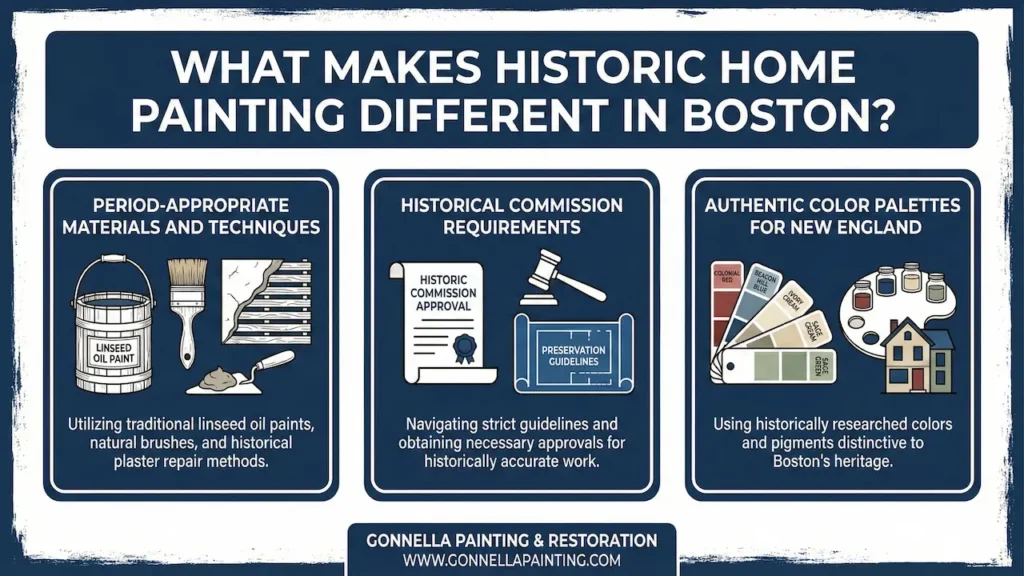
Period-Appropriate Materials and Techniques
Your old home needs the right materials. Gonnella Painting & Restoration uses period-appropriate products that match your home’s original finish. Modern paint often doesn’t work well on older homes. The architecture from the Victorian era was built with different materials.
Key considerations include:
- Wood treatments using traditional methods
- Windows and doors requiring glazing techniques
- Original glass preservation when possible
- Matching historical profiles and details
- Protecting the integrity of your property
The right approach honors the craftsmanship of builders from England and early America.
Historical Commission Requirements
You can’t just pick any color and start painting. Boston’s historical commission reviews changes to historic properties. Beacon Hill has strict rules. Cambridge enforces its own standards. Each municipality wants to preserve the neighborhood’s character. You need approval before starting work. Expert guidance helps you handle the paperwork and prevents costly delays.
Authentic Color Palettes for New England
Your historic home deserves colors that match its era. New England homes traditionally used specific palette choices:
- Dark reds and burgundies
- Deep greens and forest tones
- Warm earth tones and ochres
- White trim highlighting architectural details
- Historically accurate shutters and doors
Gonnella Painting & Restoration knows which colors approved boards will accept. The right colors enhance your home’s timeless beauty.
Why Historic Properties Need Expert Restoration Services
Historic properties face problems that newer homes don’t experience. Age brings specific challenges that require specialized knowledge and skilled workers. Understanding these issues helps you see why expert restoration services matter so much.
Common Issues in Victorian-Era Homes
Victorian-era residential buildings show their age in specific ways:
- Wood rot damages trim and siding
- Old windows let in drafts and leak
- Doors stick or don’t close properly
- Moisture seeps into walls
- Poor insulation makes heating, ventilation, and air conditioning expensive
- Paint peels and cracks from age
These issues need special care. A regular painting company might not understand these problems. Restoration services address the root causes through proper construction methods.
Lead Dust and Safety Concerns
Lead dust is a serious health risk in older homes. Most homes built before 1978 contain lead paint. Professional lead paint handling protects your family. Skilled workers use special care to minimize exposure. They follow Massachusetts regulations. This expertise keeps everyone safe during the project.
Preserving Architectural Integrity and Value
Your property’s architectural details make it special. Original molding, decorative trim, and unique windows add value. These features attract buyers who appreciate historic buildings. Careful restoration maintains this value. It also protects your neighborhood’s heritage. Expert restoration honors the original architect’s vision and keeps your home’s story alive.
Understanding Boston’s Historic District Guidelines
Different areas in Greater Boston have different rules for historic home restoration. Knowing your neighborhood’s specific requirements saves time and frustration. Each area has its own standards and approval processes.
Beacon Hill Preservation Standards
Beacon Hill enforces some of the strictest preservation guidelines in Boston. You need permission to change exterior colors. Window replacements must match the original styles. The historical commission looks at every detail to protect the neighborhood’s unified aesthetic and maintain historic preservation standards.
| District | Key Requirements | Review Time |
| Beacon Hill | Color approval, window matching, trim details | 4-6 weeks |
| Cambridge Historic | Exterior changes, material approval | 3-5 weeks |
| South End | Architectural accuracy, authentic materials | 3-4 weeks |
| Back Bay | Period-appropriate finishes, door styles | 4-5 weeks |
Cambridge and Greater Boston Requirements
Cambridge has multiple historic districts. Greater Boston towns like Brookline and Newton also preserve historic properties. Some areas focus on exterior appearance only. Others review interior renovation changes, too. Gonnella Painting & Restoration works throughout Greater Boston and knows the requirements in each area.
The Municipality Approval Process
| Step | Timeline | What’s Needed |
| Application | Week 1 | Paint colors, photos, materials |
| Commission Review | 2-4 weeks | Detailed scope and plans |
| Public Meeting | 1-2 weeks | Project presentation |
| Final Approval | 1 week | Written permission |
Starting early prevents delays. Professional help ensures you submit complete applications.
Essential Exterior Painting and Restoration Services
Exterior painting for historic home restoration involves multiple specialized steps. The work goes beyond simple paint application. Proper exterior work protects your home and maintains its character.
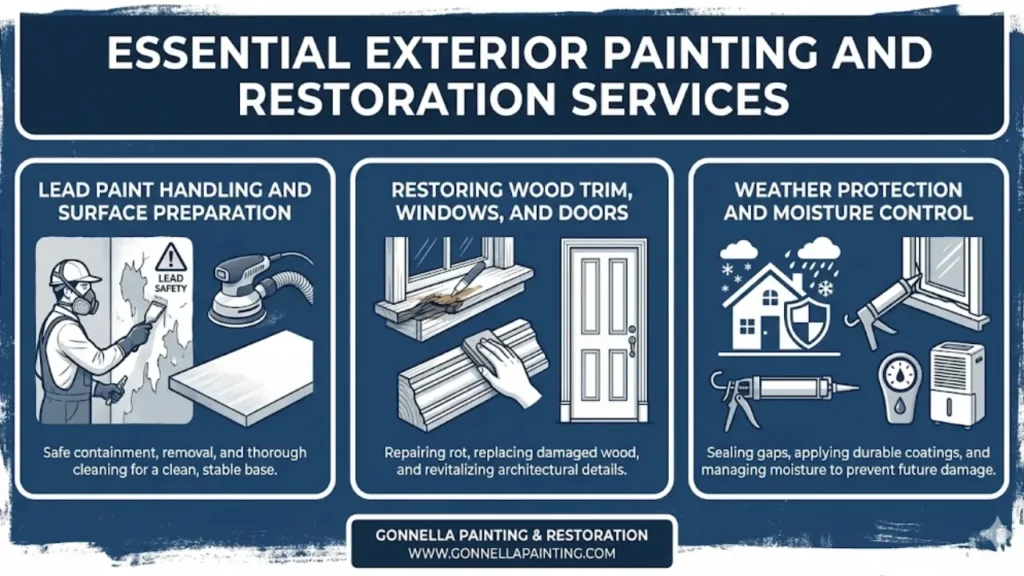
Lead Paint Handling and Surface Preparation
Surface preparation starts every good paint job. Historic properties need extra attention:
- Test for lead contamination
- Set up containment systems
- Remove old paint safely
- Inspect wood surfaces for damage
- Complete repairs before painting
- Protect the surrounding areas
Workers carefully follow all safety protocols. This thorough approach protects your family’s health and creates a surface that holds paint well.
Restoring Wood Trim, Windows, and Doors
Wood elements need expert carpentry work. Rotted sections get replaced with matching materials. Windows often need reglazing. Old glass can be saved and reset. Doors get planed and adjusted. Trim details get rebuilt to match originals. This exceptional craftsmanship brings back your home’s character. Gonnella Painting & Restoration employs skilled craftspeople who restore elements rather than replace them when possible, creating restored original features.
Weather Protection and Moisture Control
New England weather is tough on historic homes. Rain, snow, and humidity cause moisture problems:
- Seal gaps around windows and doors
- Improve drainage systems
- Add protective barriers
- Upgrade insulation where possible
- Apply a weather-resistant finish
These steps protect your property from weather damage while reducing energy costs.
Period-Appropriate Exterior Finishes
The final finish should match your home’s era. Different periods used different paint sheens. Historically accurate finishes look authentic and perform better on old materials. The right finish enhances decorative elements and showcases the home’s architectural style.
The Historic Home Restoration Process
Historic Home Painting and Restoration in Boston follows a careful step-by-step approach. Understanding the process helps you know what to expect. Each step builds toward a successful project.
Consultation and Property Assessment
The process starts with a consultation. Professionals visit your property and examine the exterior and interior. They note problems and opportunities. They discuss your goals and expectations. This assessment identifies the scope of work needed. Good communication during this phase sets clear goals.
Scope, Estimate, and Timeline
After assessment, you get a detailed scope of work listing every task. The estimate breaks down costs clearly.
| Work Category | Includes | Typical Cost |
| Exterior Painting | Surface prep, lead paint handling, paint application | $15,000-$30,000 |
| Window Restoration | Reglazing, repairs, and glass work | $500-$1,500 each |
| Carpentry Work | Trim, doors, and structural repairs | $5,000-$15,000 |
| Full Restoration | All exterior and interior work | $50,000+ |
The timeline shows each phase of work. Project management plans minimize disruption.
Securing Historical Commission Approval
Your contractor helps with approval paperwork. They prepare the required documents and know what the historical commission wants to see. Their expertise improves approval chances and makes the process less stressful.
Project Phases and Communication
Work happens in organized phases:
- Phase One: Preparation and setup
- Phase Two: Exterior work and repairs
- Phase Three: Paint application
- Phase Four: Interior restoration
- Final Phase: Cleanup and inspection
Regular communication keeps you informed about progress. Good project management keeps work on schedule.
Common Homeowner Challenges with Historic Restoration
Property owners of historic homes face several common struggles. Knowing these challenges ahead of time helps you prepare. The right contractor helps you overcome each obstacle.
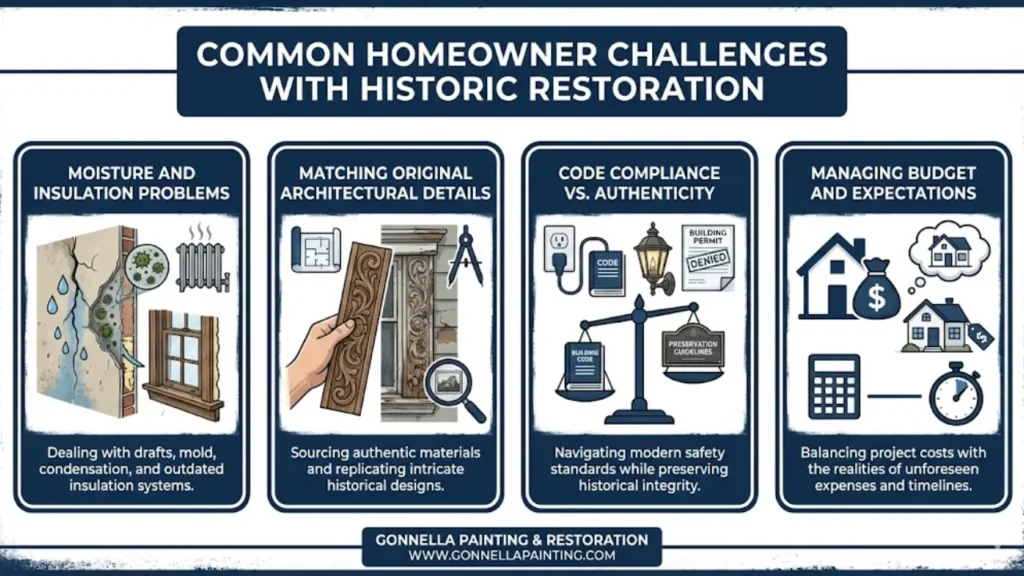
Moisture and Insulation Problems
Moisture damage is common in older homes. Poor drainage lets water reach foundations. Old windows leak during storms. Inadequate insulation creates condensation. These problems damage wood and paint. Solutions require careful diagnosis and proper construction techniques.
Matching Original Architectural Details
Finding matching materials challenges homeowners. Original molding profiles aren’t sold anymore. Old glass has unique characteristics. Skilled craftspeople can recreate missing elements using traditional tools. This attention to detail ensures seamless repairs.
Code Compliance vs. Authenticity
Modern building codes sometimes conflict with historic methods. Massachusetts requires certain safety features. Balancing code requirements with authenticity takes creativity. Expert contractors find solutions that satisfy both while protecting safety.
Managing Budget and Expectations
Historic restoration costs more than standard work. Special care takes time. Clear communication about expectations helps manage the investment wisely.
FAQs
Do I Need Approval to Paint My Historic Home in Boston?
Yes, if your home sits in a historic district, you need approval to repaint. Beacon Hill, parts of Cambridge, and other Greater Boston areas require review. The historical commission must approve exterior color changes. Check with your local municipality to be sure.
How Much Does Historic Home Restoration Cost in Greater Boston?
Costs vary based on your home’s condition and the scope of work. A simple exterior painting project might start around $15,000. Complete restoration can cost $50,000 or more. Lead paint handling adds expense. Custom carpentry increases costs.
How Long Does a Historic Exterior Painting Project Take?
Most exterior painting projects take 2-4 weeks. Larger homes need more time. Complex restoration work extends the timeline. Weather affects exterior work schedules. The approval process adds weeks before work starts.
Can I Change the Color of My Historic Property?
Color changes are possible but need approval. Historical commissions review proposed colors. Period-appropriate colors typically approve more easily. Your painting specialist can recommend colors likely to gain approval and fit the neighborhood’s character.
What Should I Look for in a Historic Restoration Specialist?
Look for proven experience with historic buildings. Ask for references from other historic property owners. Check that they understand preservation guidelines. Verify they follow proper lead dust safety procedures. Ensure they employ skilled craftspeople. Good communication is essential.
Conclusion
Your historic home represents an important piece of Boston’s architectural legacy. It deserves the expert care that proper restoration provides. Historic Home Painting and Restoration in Boston requires specialized knowledge, skilled workers, and deep respect for preservation. The challenges of moisture, lead paint, and approval processes can feel overwhelming. However, the right partner makes the journey smooth.
Gonnella Painting & Restoration brings the expertise and attention to detail your property deserves. They restore your home’s timeless beauty while protecting its historical value. Take pride in your historic home. Contact them today for a consultation and estimate. Let them help you preserve your piece of New England history.